Hair Restoration
PRP and Exosome Options
PRP: 750/Treatment
PRP + Exosomes: 1150/Treatment
Minimum 3 treatments needed at 4–6-week intervals for optimum results
PRP Treatment or Hair Loss
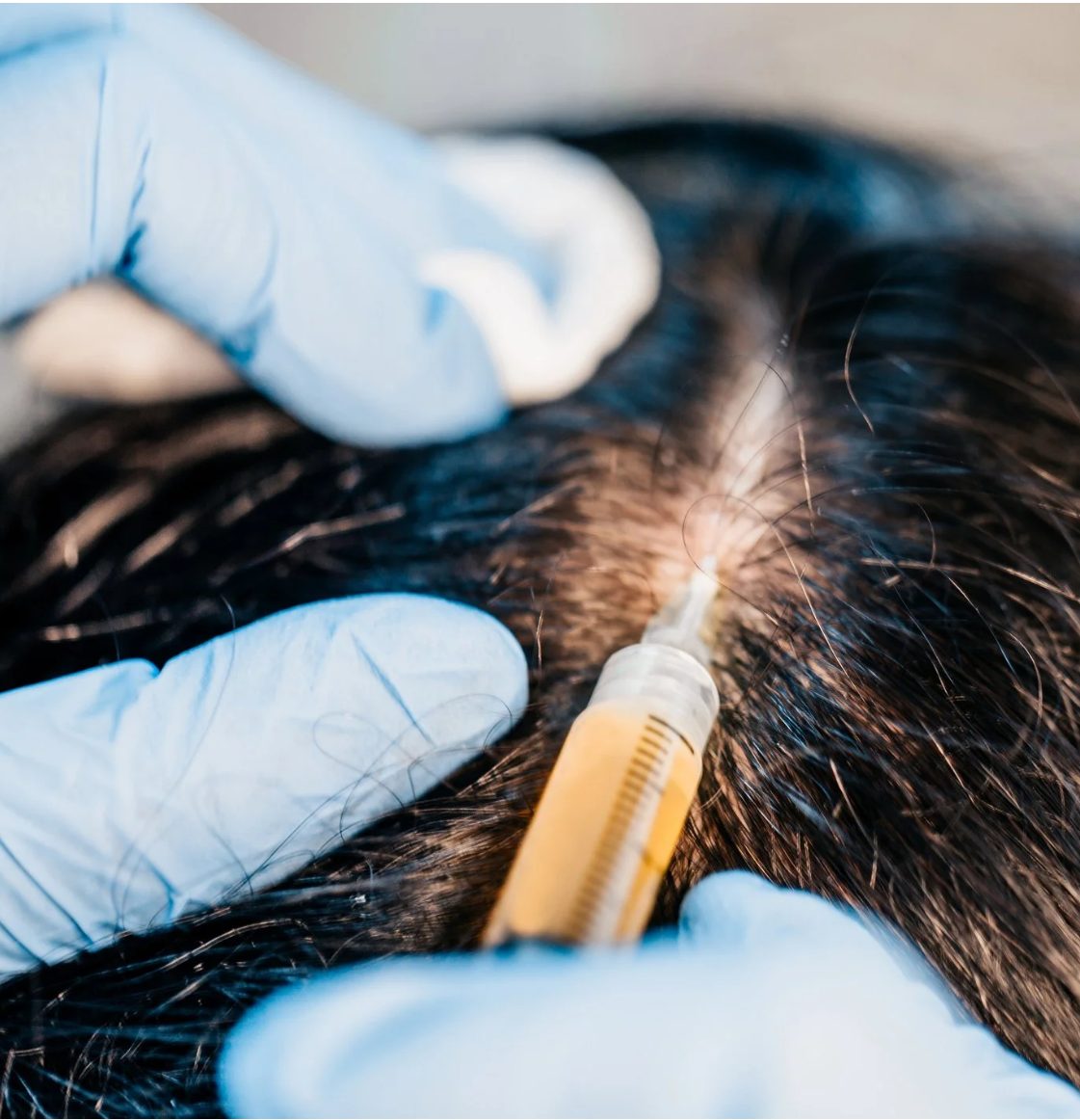
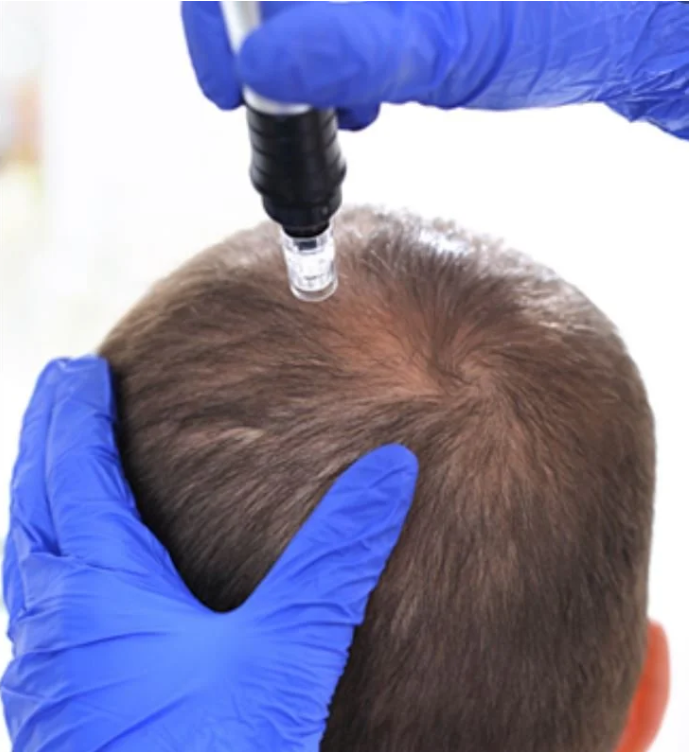
Platelet-Rich Plasma (PRP) has been shown to be an effective, safe, and non-surgical method for hair loss treatment. The treatment takes platelet-rich plasma from the patient’s own blood. A topical anesthetic is applied to the treatment area before injection to minimize the potential for discomfort. Once the PRP is isolated from the blood, it is injected into the area affected by hair loss or hair thinning. PRP is then miconeedled into the scalp to additionally help promote hair growth and maximize the efficacy of each treatment.
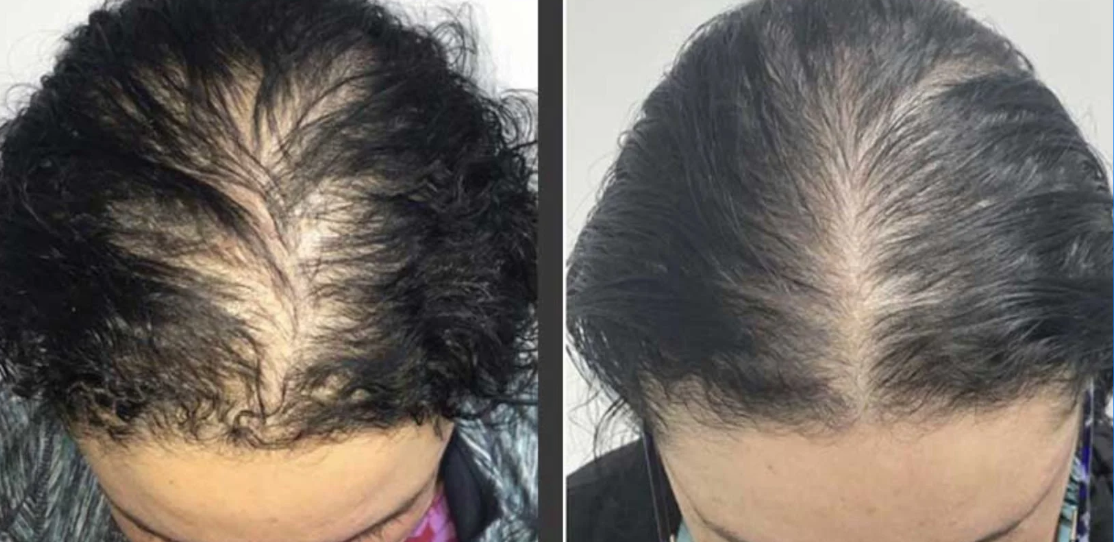
The PRP triggers the natural hair growth process and strengthens the hair follicles to promote regrowth and prevent hair loss. The procedure is simple and requires minimal downtime or discomfort, making it an excellent option for patients who are wary of surgical options, such as hair transplants.
Why Consider PRP Hair Loss Treatment?
For decades, scientists have worked tirelessly in their attempt to develop a permanent way to regrow thinning hair. Most hair regeneration products, such as popular drugs like minoxidil and finasteride, are only capable of providing temporary improvement. And, they must be used religiously every day, as discontinued use of such products can sometimes result in even more rapid loss of one’s hair.
In addition to the above, individuals also had the option of restoring their hair surgically. But autologous single follicle and follicular unit transplantation (colloquially known as “plugs”) is not only extremely painful, and very expensive, it is also highly time consuming.
The PRP with or without Exosome Hair Loss treatment, on the other hand, offers patients an exciting and effective alternative to hair loss surgery.
Candidates who may benefit from PRP/Exosome Therapy
Started to lose their hair a few years ago
Have thinning hair or hair loss due to menopause
Progressive hair loss
Want to increase their hair volume
Want to proactively prevent hair loss from occurring
Too young for hair transplant surgery
Unsuccessfully attempted other hair regrowth treatments
Exosome Therapy
What Are Exosomes?
Exosomes are “extracellular vesicles” that play a crucial role in cell-to-cell communication. Extracellular vesicles are tiny structures that are naturally produced by cells in the body. Think of them as tiny packages or bubbles that contain various molecules, such as proteins, nucleic acids (like DNA and RNA), and other substances.
These vesicles play important roles in cell-to-cell communication, as they can transport these molecules to other cells, influencing their behavior and function.
Extracellular vesicles act like messengers, carrying essential information between cells. They can affect processes like growth, repair, and immune response by delivering specific instructions or signals to nearby or distant cells. They are rich in growth factors, cytokines, and other signaling molecules that regulate various cellular processes, including tissue repair and regeneration.
How Do Exosomes Help Treat Hair Loss?
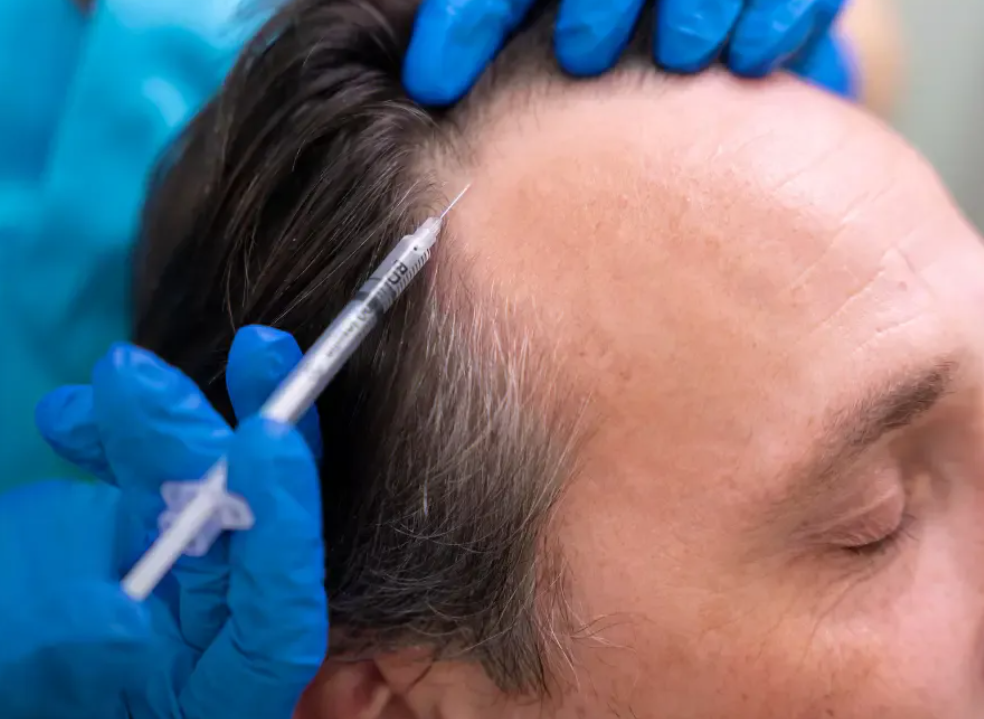
Exosome hair loss treatment works on a cellular level to stimulate hair follicle growth and rejuvenation. The growth factors and cytokines contained within the exosomes promote angiogenesis (the formation of new blood vessels) and stimulate the proliferation of hair follicle stem cells.
This leads to improved blood flow to the scalp, increased nutrient delivery to the hair follicles, and enhanced follicle regeneration, resulting in thicker, healthier hair growth.
Exosomes make an excellent addition to classic PRP therapy. With the addition of exosomes, it does not matter your current health status. PRP is usually more robust the younger you are. However, exosomes are no age dependent and will provide similar results despite your age. Plus, exosomes will generate quicker and more robust responses to treatment.
Hair Loss Treatment Procedure
The area of the scalp affected by the hair loss is first prepped with a topical anesthetic to minimize the tenderness of the procedure. PRP is then gently injected into the patient’s scalp. To help promote additional hair growth, exosomes may be added to maximize treatment efficacy.
The process of obtaining PRP involves a blood draw and a centrifuge. To yield PRP, blood is drawn from your arm, then spun down in a centrifuge (a machine that spins at high speeds to help separate blood components). After centrifuging, the plasma rises to the top, and the lower part of the plasma is the PRP. The concentrated PRP also contains growth factors and a matrix for which the exosomes can migrate.
While some mild soreness may persist for about a week following treatment, patients are able to return to their normal daily routine as soon as a day after their Hair Loss Treatment. It is recommended that for about a week, during which times the scalp cells will initialize regeneration, activities that cause sweating should be avoided.